SUMMARY OF THE MORNING DISCUSSION WITH JOHN BOORMAN
"I like to build my stories around strong male characters, which probably has something to do with the fact that I am such a weakling myself", states movie director John Boorman, without providing an explanation to his statement.
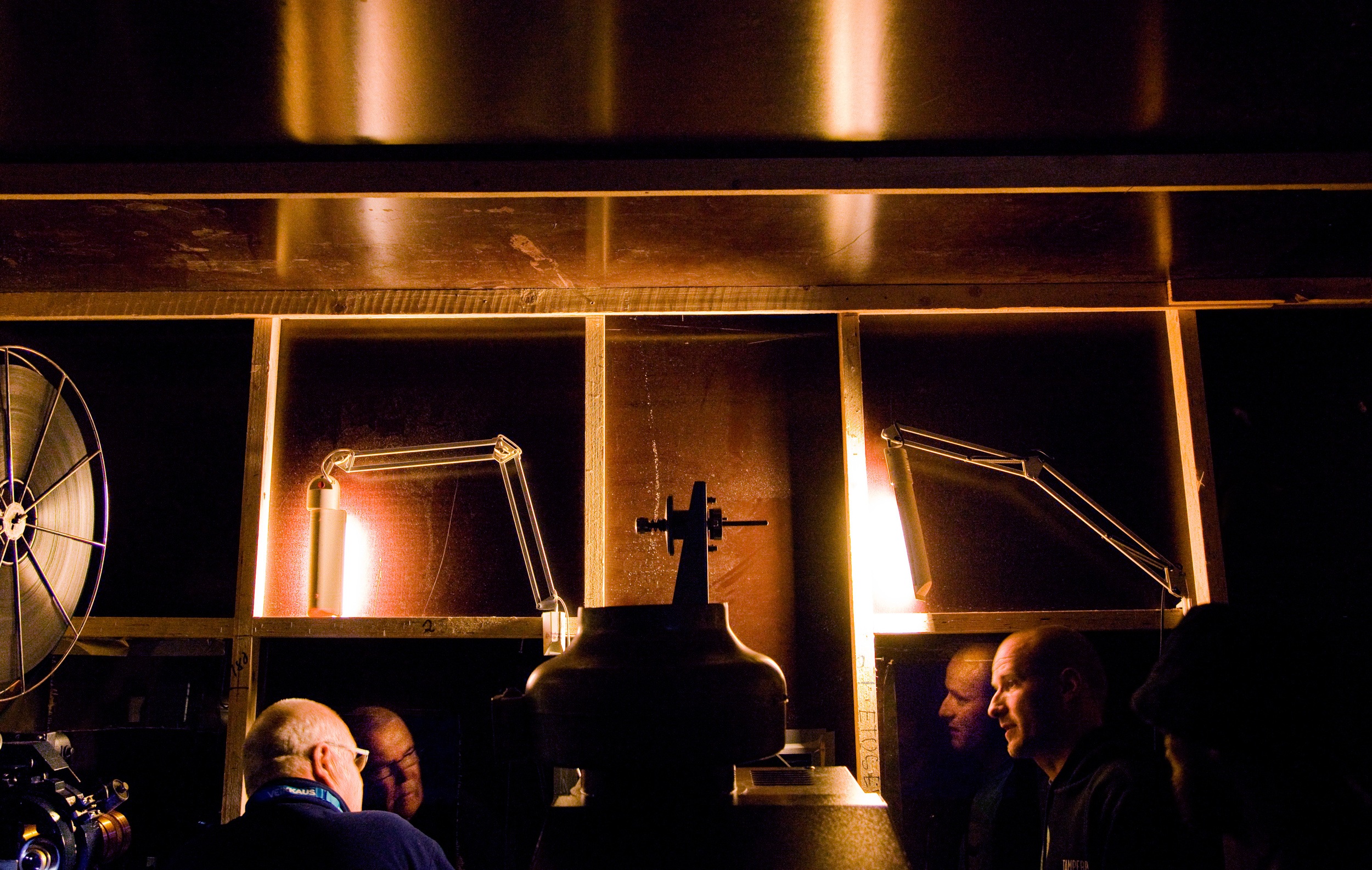
Photographer: Santeri Happonen
Boorman lived his childhood during the time of the second World War.
"German bombs destroyed our homes and we moved next to our grandparents bungalow on a river shore. It was like a paradise far away from bombs. My father went to war, so I lived together with my mother, three aunts and three sisters. I have been grown by women."
Even though his family was protestant, Boorman went to a catholic school.
"I thought that the both branches of Christianity couldn't be right, the other one had to be wrong. It kept disturbing me. Once I was down by the river and I understood that there was another possibility - what if they both were wrong? That was such a relief. I felt like I was levitating. To me, it was the end of religion."
For Boorman, the river is something more than just a place.
"I have been canoening in great rivers, seeking and finding harmony."
Boorman became a movie director after working with television. In the beginning of his career he made culture programmes and documentaries for BBC. The former documentary filmmaker compares cinema to a dream.
"You go to a dark room to see a movie, and it is like falling asleep."
Boorman thinks that the development of technology has dragged cinema far away from its origins.
"There are movies that try to be real, but it is impossible. I always say to my students that this is not life. You use the colours artificially and the spectrum is narrow. Instead of simulating life, dream movie tries to bring distance between life and cinema."
In Point Blank, Boorman used the visional power of cinema. In opening sequence, the main character is shot.
"Things begin to happen, when he lays there dying. The film is more like a dream instead of being realistic. That gave me a tremendous freedom in space, time and colours."
Inspiration, too, evolves from the unconscious, and according to Boorman, making a movie is not a rational process. Afterwards, the sources of inspiration are revealed. In Point Blank, treachery was the central theme and the director himself tries to find a reason to that from his childhood.
"While my father was in the war, my mother had a lover who was my father’s best friend."
When Boorman looks back to the films he’s made, he sees them differently. When Deliverance was finished, he felt he had directed an extremely conventional movie. When he watches Deliverance today, he feels that the image and structure seem to stream, which enters into the world of dreams. When he made the film, he felt he hadn't been working in such an avant-garde way as before.
Boorman sees his collaboration with the actors as a learning process.
"I still don't fully understand acting. There are two different categories of acting. In defending acting, the actor feels insecure, and in giving acting, the actor is vulnerable, reveals his heart and wants to take risks. I search for those magical moments that just seem to come from somewhere."
(The translation was made from a Finnish original.)
|